 0
0
 0
0 English
 Español
 Français
Table of Contents
1.The Uneniable Allure: Why We Crave the Sunken Spa
2.The Hidden Headaches: When Maintenance Access Becomes a Mission Impossible
3.The Best of Both Worlds: Smart Designs for Sinking Your Spa
4.The Final Verdict: To Sink or Not to Sink?
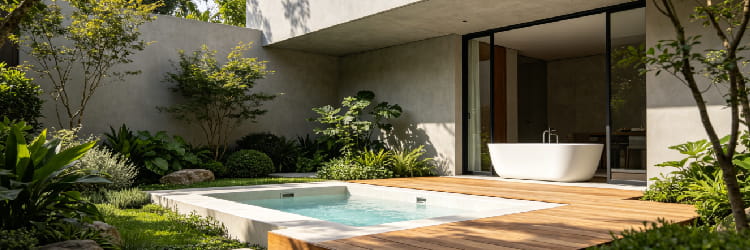
1.The Uneniable Allure: Why We Crave the Sunken Spa
Let's be honest, the primary driver for wanting a sunken or in-ground hot tub is pure, unadulterated style. It’s an architectural statement. But the benefits go beyond just looking good.
Seamless Aesthetic Integration
The number one reason people choose this installation style is its visual appeal. A sunken hot tub doesn’t feel like an appliance placed on your patio; it feels like a feature built into your landscape. Its low profile means it doesn't interrupt sightlines or dominate the space, a major plus for those who prefer clean, minimalist design elements . It creates a harmonious, modern look that can be customized to flow perfectly with your decking, stonework, or garden . Whether you’re aiming for a resort-like feel or a natural oasis, a sunken spa blends in beautifully, elevating the entire outdoor area.
The Luxury Spa Experience
There’s something inherently luxurious about stepping down into warm, bubbling water. It mimics the experience of a natural hot spring or a high-end spa. This design choice fosters a sense of elegance and tranquility, transforming your backyard into a private retreat . This immersive experience, where you can lean back more deeply into the water, enhances the feeling of escape and relaxation . The design possibilities are also vast, allowing for unique geometric shapes and architectural elements that you simply can't achieve with a standard above-ground model .
Unobstructed Views and Enhanced Space
An above-ground hot tub, for all its merits, is a large object. It can block the view of your garden, create a visual barrier on a deck, and make a smaller yard feel even more cramped. A sunken hot tub solves this problem entirely. By sitting flush with the ground, it maintains an open, airy feel. In fact, it can even make a space feel larger and more expansive . This is especially beneficial on smaller patios or in yards where preserving a beautiful view is a top priority.
Effortless Entry and Exit
For some, accessibility is a key factor. Climbing over the high wall of an above-ground spa can be challenging or simply inconvenient. A sunken hot tub offers walk-in or step-down access, making it much easier and safer to get in and out . This creates a more inviting and user-friendly experience for people of all ages and mobility levels.
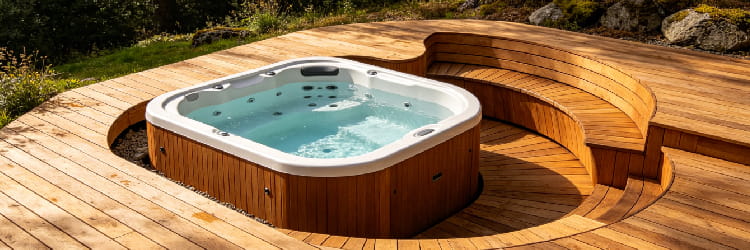
2.The Hidden Headaches: When Maintenance Access Becomes a Mission Impossible
Okay, you're sold on the looks. But here's where we need to have a serious talk. A hot tub is a complex piece of machinery with pumps, heaters, blowers, and a whole lot of plumbing. When you sink it into the ground, you are essentially burying all that vital equipment.
Imagine sealing the hood of your car shut for a sleeker look. It might look cool, but the moment you need to check the oil or replace a belt, you're in for a world of pain. This is the central problem with poorly planned inground spa maintenance.
The Access Nightmare
Every hot tub will eventually need service. It’s not a matter of if, but when. A pump seal will fail, a jet will leak, or an electronic component will need replacing. With an above-ground model, a technician simply removes an access panel on the side of the cabinet . The job might take an hour or two.
With an improperly installed sunken hot tub, that same repair could involve:
- Demolition:Ripping up expensive decking, breaking up concrete, or excavating landscaping just to reach the problematic part.
- Excruciating Labor:The technician may have to lie in the dirt, contort themselves into a tiny space, or work in a poorly ventilated pit, dramatically increasing labor time and costs.
- Impossibility:In the worst-case scenarios, the necessary component is completely inaccessible without lifting the entire hot tub shell out of the ground—a massive and costly undertaking.
The design phase must account for service access. Many sources strongly advise that planning for service hatches, removable panels, or a service vault is non-negotiable for any in-ground installation .
The Perils of the Pit: Ventilation and Drainage
The area housing your hot tub’s equipment is not just a storage space; it needs to breathe. Pumps and motors generate heat and require adequate airflow to prevent overheating and premature failure. When you entomb them in a tight, unventilated pit, you're essentially baking the components you rely on for your spa to function. As one resource highlights, ensuring proper ventilation is a key consideration during installation .
Furthermore, what happens to water from leaks, overflowing, or heavy rain? A well-designed installation needs a drainage system, like a sump pump or a French drain, at the bottom of the equipment vault. Without it, you could find your expensive electronic components sitting in a puddle of water, leading to catastrophic failure.
The Upfront and Long-Term Cost
While the aesthetic is premium, so is the price tag. A built-in hot tub installation is a significant construction project. The costs go far beyond the spa unit itself, including excavation, building a support vault, decking or masonry work, complex plumbing, and electrical wiring. A typical built-in hot tub project can cost between 20,000 or more, far exceeding the cost of most portable models . While the tubs themselves are built to be durable the high cost of any future repairs due to access issues can make the total cost of ownership skyrocket unexpectedly.
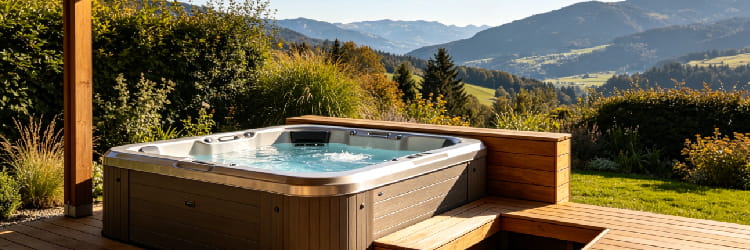
3.The Best of Both Worlds: Smart Designs for Sinking Your Spa
After reading the last section, you might be ready to abandon your sunken spa dream entirely. But don't despair! You can have that stunning, integrated look without sentencing yourself to a future of maintenance misery. The key is not if you sink it, but how. Thoughtful planning is everything.
Solution 1: The Equipment Vault
This is the professional standard for a fully sunken installation. Instead of backfilling dirt right up to the spa shell, you build a "vault" or bunker, typically from concrete blocks or treated wood, around the tub. This vault should be large enough to leave a crawlspace—ideally at least 24 inches (60 cm) of clear space—around the entire perimeter, especially on the side with the equipment pack . This space allows a service technician to get in and work comfortably. The vault must also include proper drainage and be covered by a large, reinforced, and easily removable access hatch built into your deck or patio.
Solution 2: The Semi-Sunken "Hybrid" Approach
Perhaps the most popular and practical compromise is the semi-sunken or partially-recessed installation. In this design, the hot tub is lowered part-way into the ground or deck, leaving 12 to 18 inches of the shell exposed. This approach offers several brilliant advantages:
- Easy Access:The equipment bay panels often remain above the deck level, allowing for straightforward, tool-free access just like an above-ground model.
- Retained Aesthetics:You still get the low-profile, built-in look that is far more elegant than a fully portable unit .
- Built-in Seating:The raised edge of the spa creates a natural and convenient place to sit before getting in or after getting out.
Solution 3: Designing for Access
If you opt for a fully sunken tub surrounded by a deck, design the deck itself to be your access point. Instead of nailing the boards down, use high-quality deck screws. Construct the section of the deck over the equipment bay as a large, removable panel or "hatch." While it may not be as convenient as opening a cabinet door, it’s infinitely better than demolishing your deck for a simple repair. This approach is a direct mitigation for the access issues highlighted by experts .
Comparison at a Glance
|
Feature |
Fully Sunken (With Vault) |
Semi-Sunken / Hybrid |
Standard Above-Ground |
|
Aesthetic Integration |
⭐⭐⭐⭐⭐ (Excellent) |
⭐⭐⭐⭐ (Very Good) |
⭐⭐ (Fair) |
|
Maintenance Access |
⭐⭐⭐ (Good, if planned well) |
⭐⭐⭐⭐ (Very Good) |
⭐⭐⭐⭐⭐ (Excellent) |
|
Installation Cost |
High to Very High |
Moderate to High |
Low |
|
Ease of Entry/Exit |
Excellent |
Very Good |
Fair to Good |

4.The Final Verdict: To Sink or Not to Sink?
So, should you take the plunge on a sunken hot tub?
The answer is a resounding yes, but only if you plan meticulously. The stunning aesthetic and luxurious feel are undeniable. A sunken spa can be the crown jewel of your backyard. However, it is an advanced installation that carries significant risks if done improperly.
The core trade-off is clear: you are exchanging the plug-and-play simplicity and effortless serviceability of an above-ground model for a superior, integrated look. To make that trade worthwhile, you cannot cut corners. Investing in a proper equipment vault, designing a semi-recessed installation, or building a deck with removable service hatches are not optional luxuries—they are absolute necessities for responsible ownership.
Before you break ground, consult with experienced hot tub installers and deck builders. Discuss built in hot tub access from day one. Show them pictures of your dream setup, but also ask them about their plan for the day a pump needs to be replaced five years from now. Their answer will tell you everything you need to know.
With careful foresight and a smart design, you can absolutely achieve that breathtaking sunken hot tub look without digging your own financial grave when it comes time for repairs.
_02-2.jpg?imageView2/2/w/320/h/320/format/jpg/q/75 "Whirlpool Massage Bath SPA RL-6155/1570")
-2.jpg?imageView2/2/w/320/h/320/format/jpg/q/75 "67'' Oval Freestanding Bathtub RL-MF1235/1708")

.jpg?imageView2/2/w/320/h/320/format/jpg/q/75 "Glass freestanding shower cabin shower RL-513(B)")
_sherry_01.jpg?imageView2/2/w/320/h/320/format/jpg/q/75 "Steam Cabin RL-D04(B)-Sherry")
_01.jpg?imageView2/2/w/320/h/320/format/jpg/q/75 "Adult bathtub cabin shower room steam RL-D03(B)")
 Contact us


 Leave A Message