 0
0
 0
0 English
 Español
 Français
Table of Contents
1.The Great Escape: How Your Hot Tub is Losing Heat (and Money)
2.Anatomy of a Superhero: Decoding Your Spa Cover's Powers
3.When Good Covers Go Bad: Spotting the Waterlogged Imposter
4.The Fountain of Youth: Pro-Tips for a Long and Healthy Cover Life
5.Your Cover: The Best Investment You’ll Ever Make
1.The Great Escape: How Your Hot Tub is Losing Heat (and Money)
Ever looked at your electricity bill after a month of enjoying your spa and felt a cold chill that had nothing to do with the winter air? You can thank a phenomenon you learned about in grade-school science: evaporation.
When it comes to hot tub heat loss, evaporation is Public Enemy No. 1. It is, by a massive margin, the single biggest source of energy waste for any heated body of water . How massive? While studies vary depending on conditions like wind and humidity, a consensus emerges:
- Many sources state that evaporation is responsible for 70% of a hot tub's total heat loss.
- Some conservative estimates place it around 50%.
- For a completely uncovered tub, that number can soar to over 90%.
So, how does this microscopic thief pick your pocket?
It's simple, really. Heat rises . The warm, inviting water in your tub naturally releases water vapor (steam) into the air. This process, called phase change, requires a tremendous amount of energy. Every tiny particle of water that escapes as steam carries a parcel of that precious, expensive heat with it . Your heater then has to kick on and work overtime to replace that lost energy, burning through electricity in the process.
An uncovered hot tub is essentially an open wallet, constantly exhaling heated, invisible dollar bills into the atmosphere.
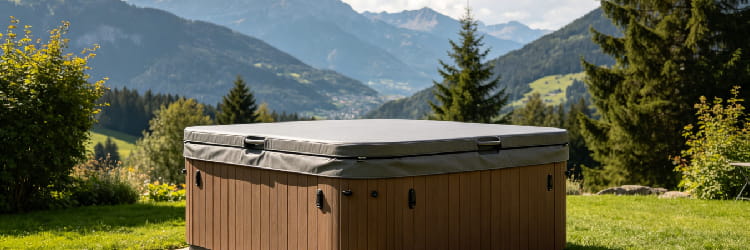
This is where your cover steps in. A high-quality, well-fitting cover acts as a barrier, trapping that steam and heat right where it belongs: in the water. By dramatically reducing evaporation, a good cover is the single most effective tool for energy conservation you have. The impact is staggering: simply using a proper cover can slash your heating costs by 50% to 70% . In an era of rising energy costs and a growing focus on efficiency—a major trend for 2026 and beyond —that’s not just smart; it’s essential.
2.Anatomy of a Superhero: Decoding Your Spa Cover's Powers
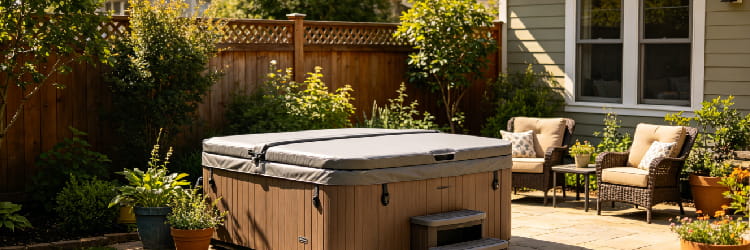
Not all covers are created equal. A cheap, flimsy cover is like showing up to a sword fight with a pool noodle. To truly combat heat loss, you need a cover with some serious superpowers. The best insulating spa cover is a multi-layered system, and its effectiveness comes down to three key components: the core, the armor, and the seal.
The Core: High-Density Insulating Foam
The heart of any great spa cover is its foam core, typically made of expanded polystyrene (EPS), a type of closed-cell foam . The insulating power of this foam is measured by its R-value.
- What is R-value?Think of it like the "tog" rating on a duvet or the SPF of sunscreen. It’s a measure of thermal resistance—the material's ability to stop heat from passing through it . A higher R-value means better insulation .
The R-value of a cover is determined by two main factors:
- Thickness:This one’s intuitive. A thicker slab of foam provides more insulation. Covers often have a taper (e.g., 5 inches thick in the middle, tapering to 3 inches at the edges) to allow rain to run off, but the average thickness is key .
- Density:This is less obvious but just as critical. Foam density is measured in pounds per cubic foot (e.g., 1.5 lb, 2.0 lb). Denser foam has fewer air pockets, making it stronger and a better insulator, thus providing a higher R-value .
While there isn't a single universal standard for 2026, many local building codes, especially in places like California, mandate minimum R-values (like R-12) for pool and spa covers . However, for optimal performance, you should look for a cover with an R-value of at least R-20 . High-performance covers can even reach R-25, R-30, or higher .
The Armor: The Mighty Vapor Barrier
The foam core has a mortal enemy: water. If steam from the hot tub penetrates the foam, its insulating properties plummet. That’s why the vapor barrier is arguably the most important, and most common, point of failure.
This barrier is a thick plastic sheeting that encases the foam cores, sealing them off from moisture . In a cheap cover, this might be a thin, flimsy plastic wrap. In a quality cover, it will be a thick, durable, marine-grade polyethylene that is vacuum- and heat-sealed to be impenetrable. This armor is what stands between your cover’s insulating core and the constant onslaught of hot, chemically treated steam.
The Seal: A Gasket-Tight Fit
You can have the highest R-value foam in the world, but if your cover doesn’t fit snugly, heat will pour out of the gaps like a busted fire hydrant. A top-tier cover will have:
- A Continuous Hinge Seal:A full-length insulating pillow that runs along the center fold, stopping heat from escaping through the main seam.
- A Tight Skirt:The vinyl flap that hangs down around the edge of the spa. It should create a tight seal against the acrylic shell, trapping a layer of air and preventing heat from being wicked away by the wind.
- Locking Straps:These don’t just provide safety; cinching them down pulls the cover tight against the spa’s rim, completing the seal.
When these three elements—a high-R-value core, a robust vapor barrier, and a perfect seal—work together, you have a truly energy-efficient system that saves you money every single day.
3.When Good Covers Go Bad: Spotting the Waterlogged Imposter
Over time, even the best cover can succumb to the harsh environment of a hot tub. The combination of intense UV rays, heavy rain or snow, and the constant barrage of hot steam from below eventually takes its toll. The most common and catastrophic failure is waterlogging.
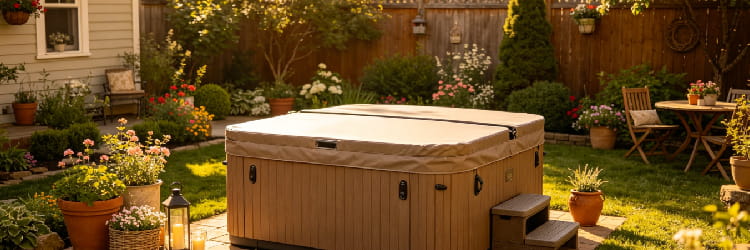
This is when the vapor barrier is breached, allowing steam to slowly seep into the closed-cell foam core . At first, it's just condensation. But over months and years, the foam becomes saturated. This transforms your insulating hero into a heavy hot tub cover that is actively working against you.
How can you tell if your cover has turned to the dark side? Here are the undeniable signs:
Primary Symptom: The Unbearable Heaviness of Being
This is the number one clue. A new, dry cover half is easily lifted with one hand. If you now need to brace yourself, grunt, and engage your core like you’re in a strongman competition just to open your spa, your cover is waterlogged . The foam has absorbed gallons of water, and you're lifting all of it.
The Consequences of a Waterlogged Cover
A heavy cover isn't just an inconvenience; it's a financial disaster. Water is a conductor of heat, not an insulator. Once the foam is saturated, its insulating ability is destroyed. In fact, a waterlogged cover can lose up to 50% of its R-value, or even more .
That water-filled foam now acts like a giant cooling element, actively pulling heat out of your spa water and transferring it to the cold air. Your heater, sensing the temperature drop, will run almost constantly, trying to win a battle it’s destined to lose. That heavy hot tub cover is the direct cause of your skyrocketing hot tub heat loss.
Other Red Flags: A Waterlogging Checklist
- Sagging or Pooling:The cover is visibly bowing in the middle, and puddles form on top after it rains. The water weight inside has broken the foam's structural integrity.
- Foul Odors:You open the cover and are hit with a musty, swampy smell. That's the smell of mold and mildew growing in the perpetually damp foam .
- Torn or Brittle Vinyl:The outer vinyl skin is cracked, peeling, or has tears. This allows rain and debris to get in from the top, accelerating the waterlogging process.
- Water Dripping from the Seams:If you lift the cover and see water dripping from the underside seams or zipper area, it’s a clear sign the core is saturated.
- Longer Heater Run Times:You hear your spa’s pump and heater running far more often than they used to, even when the outside temperature hasn't changed.
If you spot one or more of these signs, don't delay. Your cover is no longer saving you money; it's costing you a fortune.
4.The Fountain of Youth: Pro-Tips for a Long and Healthy Cover Life
While every cover has a finite lifespan (typically 3-5 years, depending on climate and care), you can maximize its effective years with some simple maintenance.
- Clean and Protect It:Regularly clean the top vinyl with a mild soap solution and a soft brush. Crucially, apply a vinyl protectant with UV inhibitors every few months. This keeps the material supple and prevents it from cracking under the sun’s relentless rays .
- Handle with Care:Never drag your cover on the ground, especially on concrete or decking. This will quickly tear the vinyl and seams. The best way to protect it is to invest in a cover lifter, which makes removal effortless and keeps the cover safely off the ground .
- Let It Breathe:After you shock your spa or add a large dose of chemicals, leave the cover off for at least 30-60 minutes. This allows the potent off-gassing to dissipate instead of being trapped underneath, where it can aggressively attack and degrade the vapor barrier.
- Repair Damage Immediately:If you notice a small rip in the vinyl or, if you can access it, the vapor barrier, patch it immediately with a vinyl repair kit. Stopping a small breach prevents it from becoming a catastrophic, waterlogging failure .

5.Your Cover: The Best Investment You’ll Ever Make
It’s easy to get excited about powerful jets, fancy lighting, and Bluetooth sound systems. But the simple, silent cover is the true MVP of your hot tub experience. It is your primary defense against energy waste, the guardian of your water chemistry, and the key to a lower electricity bill.
So, take a moment to assess your cover. Give it a lift. Is it light and cooperative, or is it a dead weight fighting you every step of the way? A heavy hot tub cover is a failed cover, one that has gone from an asset to a liability.
When it comes time for a replacement, don't just shop for the lowest price. See it as an investment. Choosing the best insulating spa cover with a high R-value, thick foam, and a durable vapor barrier will pay for itself many times over in energy savings. It’s the smartest money you’ll ever spend on your backyard oasis.
_02-2.jpg?imageView2/2/w/320/h/320/format/jpg/q/75 "Whirlpool Massage Bath SPA RL-6155/1570")
-2.jpg?imageView2/2/w/320/h/320/format/jpg/q/75 "67'' Oval Freestanding Bathtub RL-MF1235/1708")

.jpg?imageView2/2/w/320/h/320/format/jpg/q/75 "Glass freestanding shower cabin shower RL-513(B)")
_sherry_01.jpg?imageView2/2/w/320/h/320/format/jpg/q/75 "Steam Cabin RL-D04(B)-Sherry")
_01.jpg?imageView2/2/w/320/h/320/format/jpg/q/75 "Adult bathtub cabin shower room steam RL-D03(B)")
 Contact us


 Leave A Message